House Cleaning
As someone who worked at Amazon for a long time, much of it under JeffB, Andy’s actions feel like a sea change.
Jeff believes that when Amazon launches a product, feature, or service, its continuation represents a promise to customers. Discontinuing a product under his leadership was a rare occurrence compared to other major techs such as Google and Microsoft. The downside of this mindset is, similar to the one that “customers should be able to buy everything on amazon.com”, it leads to an excessive portfolio full of obsolete products.
As a customer, you may not be pleased with Andy’s decision (I am quite a fan of Amazon Book Store myself). From an investor’s perspective, however, it is positive for the stock. Andy may not excel at establishing new growth areas like Jeff, but if he can follow Tim Cook’s footsteps, optimizing the company’s operations and reducing costs, Amazon is certainly not a bad holding.
Amazon is not the only big tech that focuses on cost cutting these days. It is a prevalent move, and each company approaches it differently. Meta and Twitter, for example, focus more on cutting mid-management. While this is unpleasant for those impacted, it is good news for investors, if history is any indication.
“你对股市怎么看?”
最近的银行危机,还有之前的新冠疫情,都造成了股市的波动。人们对于这类突发事件有着本能的恐惧。很多人,包括不少机构投资者,选择“先卖再想”。这种下意识的举动,虽然情有可原,但长远来讲并不明智。对于认真的投资者来说,这样的时期正是选股的黄金时段。尤其是当下,信息发达,找到被严重低估的股票很是难得。
我们谈股票,就应该去考虑公司长远的盈利能力,而不是去关注市场波动。遗憾的是,当你打开财经新闻,无论是线上还是线下的媒体,焦点总是最近股市怎么怎么样。这类消息很容易干扰投资者,造成误判。这一点,虽然大家心里清楚,但是身在其中难以不受影响。每个人有不同的方法去提醒自己保持清醒。对我自己最有用的是下面两条。
第一,参考巴菲特和芒格的观点。巴菲特有句话“be fearful when others are greedy, and greedy when others are fearful”。另外,他和芒格在选股的时候从来不去考虑宏观参数。
第二,每次我听到新闻讲股市,就会想起一个笑话:
上帝跟每个刚进天堂的人聊天。
有一天,一个人上了天堂。上帝问:“你IQ多少?”
他说:“170。”
上帝说:“你很聪明。这个智力我们可以好好聊聊数学,探讨一下宇宙的起源和发展。”
另一天,又一个人上了天堂。上帝问:“你IQ多少?”
他说:“120。大家都说我很聪明。”
上帝说:“的确。我觉得咱们可以聊聊政治。”
再一天,又有一个人上了天堂。上帝问:“你IQ多少?”
他说:“70。不好意思,连我都知道自己智力不高,咱们能有啥好聊的?”
上帝说:“不要紧不要紧。你对股市怎么看?”
We are hiring
Our Amazon teams from development centers in Berlin, Luxembourg, and London are looking to hire Software Development Engineers, Technical Program Managers, and Machine Learning Scientists. Below you can learn more about what each of our team works on. If you are interested and would like to learn more, please send me a message or a CV.
Amazon Development Center Berlin
AWS OpsWorks
Amazon Web Services expanded to Berlin with it being the home base of the AWS OpsWorks team. At OpsWorks, we create and manage large-scale distributed services around the globe that help customers manage their applications in the cloud. Being part of Amazon Web Services (AWS) means constantly driving innovation and creating new services. For more information about AWS OpsWorks, visit our product page at http://aws.amazon.com/opsworks/ .
ML Natural Language Processing
We are the Content Linkage (aka Natural Language Processing) group and are a part of Machine Learning Core team in Berlin. We invent and build machine learning based solutions to natural language problems like machine translation, content moderation and entity and relation extraction from free-form text such as eBooks.
Scalable Machine Learning Team
Amazon’s Scalable Machine Learning Team is part of the Machine Learning Core team in Berlin. The team is composed of scientist and software developers. One of our main activities is the invention and development of machine learning algorithms that leverages AWS infrastructure and can be used by teams working on natural language processing, computer vision, forecasting, recommendation systems, and other data science problems.
ML Forecasting Team
The ML Forecasting Team is part of the Machine Learning Core team in Berlin and is composed of engineers and scientists that work on a mission critical application at Amazon: how much of a given product to order? We work closely with the business teams and fulfillment to ensure that we have the right products in the right place at the right time. We process large datasets on a massive scale to develop superior forecasting models and drive the highest level of automation and decision making at Amazon.
Visual Services Team
Amazon’s Visual Services Team is part of the Machine Learning Core team in Berlin and is composed of research scientists and software developers. We mainly focus on developing computer vision algorithms for automated understanding of images and videos, working on large-scale datasets and creating scalable and accurate solutions for diverse application fields.
Amazon Development Center Luxembourg and London
Consumer Localization
Consumer Localization is the process to identify product gaps across Amazon marketplaces, translate the identified products and make them available for purchase in all Amazon marketplaces. Sound simple? Not even close as Consumer Localization is a complex process that involves building, enhancing and maintaining a highly scalable system to scale across multiple systems with an effective workflow. The Consumer Localization development team is based in Luxembourg and works extensively with teams in Berlin, Dublin and Seattle.
Amazon EU Core Tech
Amazon EU Core Tech (AEC Tech) builds technology and services to meet the diverse language, currency, and cross-border trade needs of Amazon’s international businesses. This includes providing customers with a fully localized shopping experience, while leveraging cost opportunities from operating at a pan-EU scale, and ensuring compliance with local regulatory and tax requirements. AEC Tech operates with a 3-way charter of: 1) Extending the capabilities of Amazon’s e-Commerce platform to scale and efficiently operate our European businesses, 2) Developing “last mile” features needed to address local customer and country-specific business requirements, and 3) Providing platform functions and shared technology services to Amazon’s EU businesses. AEC Tech is based in Luxembourg, with additional development centers in Bangalore, India and London, UK.
Book Depository
Amazon’s International Technology group (InTech) owns the enhancement and delivery of Amazon’s cutting-edge engineering to all the varied customers and cultures of the world. InTech’s UK team supports retail subsidiary Book Depository (acquired by Amazon in 2011). Book Depository offers huge selection, great service, dozens of payment currencies – and free shipping to 100+ countries worldwide! In order to support this global business, InTech’s UK software development teams design and create unique systems spanning pricing, websites and backend tools – all optimized for multi-currency and multi-language. The team continually improves Book Depository customer experience by leveraging unique Amazon tools and services.

关于投资的几句话
以下是我在德国热线股票外汇板块的一篇回复。我想大约会对其他的朋友也有些帮助,所以就发上来。原帖链接在此。
新年好!
我估计,除了金融理财专业的学生,我们之中的绝大多数都是learning by doing,而不是learning before doing。这么看的话,如果让我选择人生当中的第一支有价证券,我觉得大约应该是一支与指数挂钩的ETF (exchange-traded fund)。它所挂钩的指数,可以是DJIA、S&P 500,可以是DAX、E-STOXX 50,也可以是中国的某个证券市场。
除去交易费,ETF所收取的年费用很低;因为是与某一指数挂钩,我们丧失本金的风险极低。基于这些原因,我们可以选择长期持有它。这支ETF我们最少准备要持有5年。(我们用来投资证券的钱,应该是在将来的5至10年之内不需要个人使用的钱。)有人会说,现在DJIA和DAX都在历史高点,你还要买进?如果我们决定长期持有,这些问题并不是我们所关注的。因为我们准备长期持有,我们不担心它每日每月的升跌。
ETF和一般的股票有很多相似的地方。通过持有这支ETF,我们将会非常直观的了解到证券市场工作的基本原理、供求的基本规律、国际金融政策(包括利息政策)对市场的影响;我们会亲身了解分红的概念、所在国税收的规则;我们还会对证券交易的基本手段更加熟悉,知道基本的交易类型(stop loss、trailing stop、margin…);另外,我们也对所使用的broker更加了解,知道了它基本的收费名目,知道了如何比较不同的broker。通过持有这支ETF,我们渐渐学习。当对证券交易的认识相对完善的时候,我们可以考虑丰富我们的投资组合,购买其他的ETF、基金、国债、企业债券、以及单一股票。
建议多读些书。可以从Graham的The Intelligent Investor开始。这本书,句句珠玑,是一部经典。我们这一代人大约都没有经历过29-33年那种深刻的金融危机(00和07年的危机还是不能与大萧条相提并论的)。对于投资者来说这是件幸事,但是对于学习投资来说,这是个遗憾。牛市大家都能投资,真正好的投资者是历经熊市依然可以积累财富的人。
网上也有很多讯息。我个人比较常用的网站包括CNBC、Morningstar、Bloomberg、finanzen.net。同样记得关注Warren Buffett和George Soros这些经验老到的投资者。他们的话值得聆听。不过,网上的评论可以给我们提供咨询,却不能代替我们做出抉择。另外记住,投资没有捷径。听上去好得都不像真的了,往往就不是真的(If it sounds too good to be true, it probably isn’t)。整个资本市场大体上是很高效的,神一般的投资者长期年均回报率在20%左右。所以,注意区分神话与现实。
这大约是我一时间所能想到的。希望大家补充。
PS: “有了1000欧元的余钱就应该开始考虑投资了,并不该等到100万欧元。” 是一种简单的、基于计算的事实(compound interest,复利的感念),而不是一种主观臆想。当然,这不是说1000欧元和100万欧元的投资组合构成应该类似。
My talk at NIPS 2011 workshop

My NIPS 2011 talk at Choice Model and Preference Learning workshop, “Label Ranking with Abstention: Predicting Partial Orders by Thresholding Probability Distributions” is now available at VideoLectures.net.
新闻的暗语
亲切友好的交谈 —— 字面意思;
坦率交谈 —— 分歧很大,无法沟通;
交换了意见 —— 会谈各说各的,没有达成协议;
充分交换了意见 —— 双方无法达成协议,吵得厉害;
增进了双方的了解 —— 双方分歧很大;
会谈是有益的 —— 双方目标暂时相距甚远,能坐下来谈就很好;
我们持保留态度 —— 我们拒绝同意;
尊重 —— 不完全同意;
赞赏 —— 不尽同意;
遗憾 —— 不满;
不愉快 —— 激烈的冲突;
表示极大的愤慨 —— 现在我拿你没办法;
严重关切 —— 可能要干预;
不能置之不理 —— 即将干涉;
保留做出进一步反应的权利 —— 我们将报复;
我们将重新考虑这一问题的立场 —— 我们已经改变了原来的(友好)政策;
拭目以待 —— 最后警告;
请于X月X日前予以答复 —— X月X日后我们两国可能处于非和平状态;
由此引起的后果将由**负责 —— 可能的话我国将诉诸武力(这也可能是虚张声势的俗语);
这是我们万万不能容忍的 —— 战争在即;
这是不友好的行动 —— 这是敌视我们的行动,可能引起战争的行动;
是可忍孰不可忍 —— 不打算忍了,要动手了;
悬崖勒马 —— 想被XX么?
勿谓言之不预也 —— 我们要亮必杀了!
历史上,小白兔两次祭出必杀技“勿谓言之不预也”,分别是1962年9月22日《人民日报》社论《是可忍,孰不可忍》和1978年12月25日《人民日报》社论《我们的忍耐是有限度的》,对象分别是印度和越南。自韬光养晦发展经济之后还从未在正式场合使用过。
转载于凯迪社区,略有修改。
XRCE is looking for an intern on Bayesian preference learning

Xerox Research Center Europe is searching for an intern on Bayesian preference learning. It is a great opportunity for anyone interested in doing fantastic research at a fantastic place.
Check the specific here. And have fun in France!
Thank Shengbo for sharing this news with me.
My talk at ECMLPKDD 2011
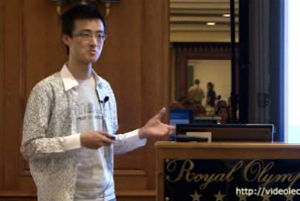
My ECMLPKDD 2011 talk on “Learning Monotone Nonlinear Models using the Choquet Integral” is now available at VideoLectures.net. Check it out, and let me know what you think.
The greatest mathematicians of all time

Even though I truly believe math is sexy, I know putting the term “mathematician” in the title has already cost half of the readers.
For the rest half, take a look at the picture above. How many of these geniuses can you recognize?
If you can name more than half of them, bravo! Please read on: http://fabpedigree.com/james/mathmen.htm
– Viewer discretion is advised: Once you start reading, it sucks your time like a black hole. –
 Data, Knowledge & Life